

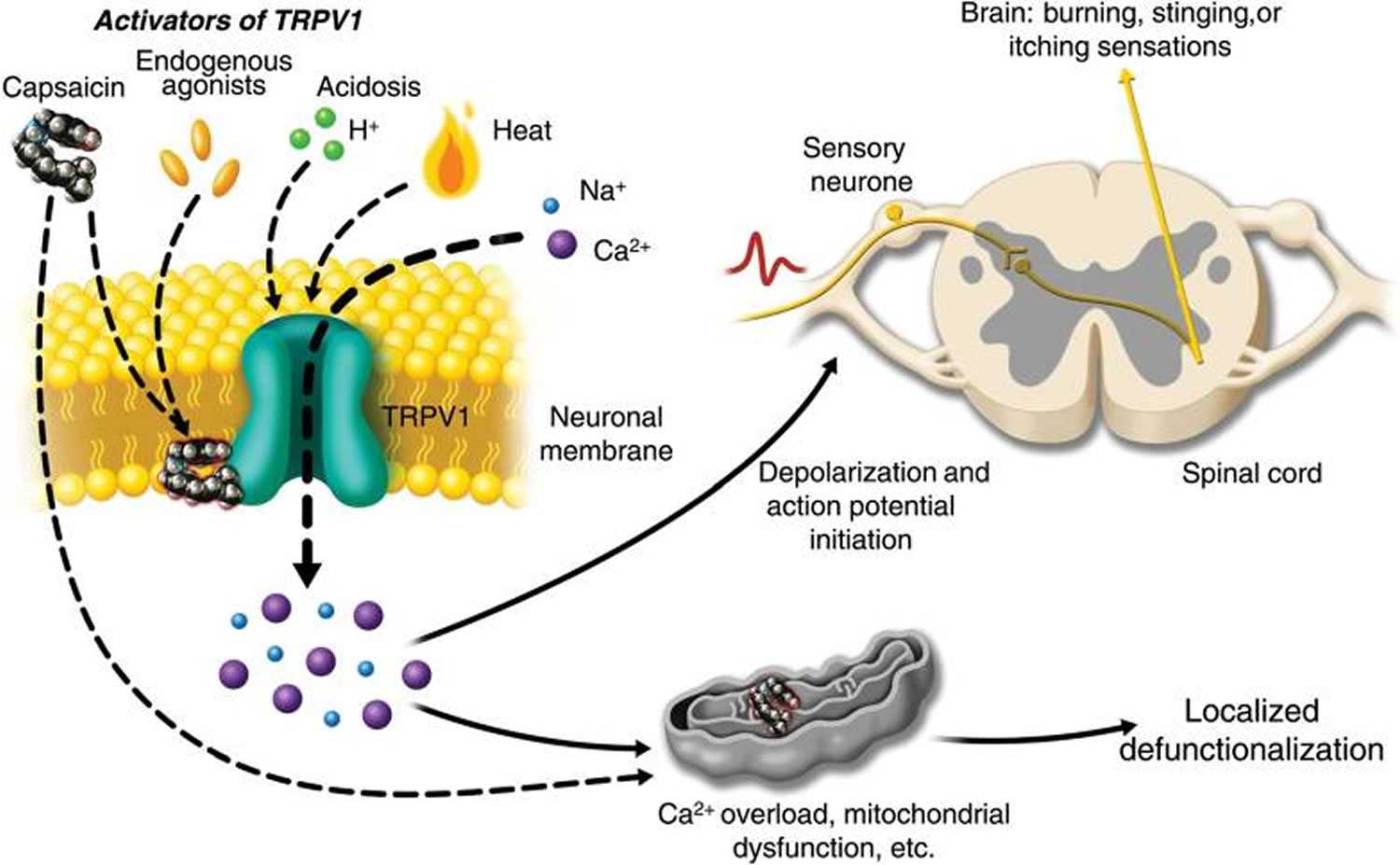
Capsaicin interacts with specific receptors in our bodies, known as transient receptor potential vanilloid 1 (TRPV1) receptors, also referred to as heat receptors. These receptors are primarily found in sensory neurons throughout our bodies, including the skin, mouth, and gastrointestinal tract. TRPV1 receptors are involved in detecting and responding to heat, as well as certain chemicals, including capsaicin. When capsaicin comes into contact with TRPV1 receptors in the mouth, it triggers a sensation of heat or a "burning" feeling. However, it's important to note that this burning sensation is not an actual increase in temperature. The heat receptors are activated by capsaicin, but it doesn't physically raise the temperature of our mouths. The activation of TRPV1 receptors by capsaicin leads to the release of neurotransmitters, including substance P, which is involved in transmitting pain signals to the brain. This is why capsaicin can cause pain and discomfort initially. Interestingly, the interaction between capsaicin and TRPV1 receptors also has an effect on the release of endorphins. Endorphins are natural pain-relieving compounds that can induce feelings of pleasure and well-being. When capsaicin activates the TRPV1 receptors, it triggers the release of endorphins, which can lead to a sense of euphoria or a "spicy high" in some individuals. So, while the sensation of heat and burning caused by capsaicin is perceived in our minds, it is a result of the activation of TRPV1 receptors and subsequent neurological responses. It is not an actual increase in temperature, but rather a chemical interaction with receptors responsible for detecting heat and transmitting pain signals.
Pain relief: Despite causing initial discomfort, capsaicin has analgesic properties. It can be found in topical creams used to alleviate muscle and joint pain, including arthritis and neuropathy.
Endorphin release: When capsaicin binds to the pain receptors in our mouths, it triggers the release of endorphins, which are natural pain-relieving and mood-enhancing chemicals in the brain. This is why some people experience a "spicy high."
Heat resistance: Birds are immune to the heat of capsaicin. While mammals, including humans, experience the burning sensation, birds cannot detect it. This is advantageous for plants as birds aid in seed dispersal.
Long-lasting burn: Capsaicin is hydrophobic, meaning it repels water. When we drink water after consuming something spicy, it can spread the capsaicin around our mouths, intensifying the burn. Consuming dairy products, on the other hand, helps because capsaicin is soluble in fat.
Potential health benefits: Capsaicin is a remarkable compound that not only adds spice to our food but also offers potential health benefits and intriguing biological interactions. It may help boost metabolism, reduce inflammation, lower blood pressure, aid digestion, and even have anticancer properties, although further research is needed.
Culinary diversity: Capsaicin is a crucial ingredient in various cuisines worldwide, including Mexican, Thai, Indian, and Korean. It adds flavour, heat, and complexity to dishes and is used in sauces, salsas, curries, and more.
Evolutionary purpose: The production of capsaicin in chili peppers is believed to have evolved as a defence mechanism against mammals. While mammals experience discomfort from capsaicin, birds and some other animals can eat chili peppers without sensing the heat, aiding in seed dispersal.
Debunking a common myth
Will my sauce be any hotter if I add more peppers to the mix?
Short answer: No, it won’t be. And here’s why.
The Scoville Heat Units (SHU) measure the concentration of capsaicinoids, the compounds responsible for the heat in chilli peppers. If you add more peppers to a sauce, it will increase the volume and potentially extend the duration of the burn, but it WILL NOT increase the SHU beyond the level of the hottest pepper in the mix.
Even if you add more peppers to a sauce, the SHU will still be determined by the heat level of the individual peppers, and it won't sum up linearly. So, if one pepper is 2 million SHU, and there are 5 of them in a sauce, the sauce will still be around 2 million SHU, even though the experience might be more intense due to the quantity of peppers.
Do not confuse Capsaicin with Capsicum
In the world of culinary and pharmaceutical sciences, two terms often spark curiosity and occasional confusion: Capsicum and Capsaicin. These closely related compounds, while integral to many aspects of our daily lives, serve vastly different purposes.
Capsicum: The Flavourful Fruit
Capsicum, commonly known as bell peppers, chili peppers, or sweet peppers, is a genus of flowering plants belonging to the nightshade family (Solanaceae). These vibrant and versatile fruits come in various shapes, sizes, and colours, ranging from the mild and sweet bell pepper to the fiery habanero. Capsicum peppers have been cultivated for centuries and play a pivotal role in culinary traditions worldwide. The primary distinction of Capsicum lies in its culinary utility. These peppers are valued for their rich flavour profiles, which range from sweet to intensely spicy. They are a staple ingredient in countless dishes, imparting distinctive tastes and vibrant colours to cuisines around the globe. Capsicum peppers are rich in vitamins, particularly vitamin C, and contribute to the culinary world with their enticing aroma and texture.
Capsaicin: The Fiery Compound
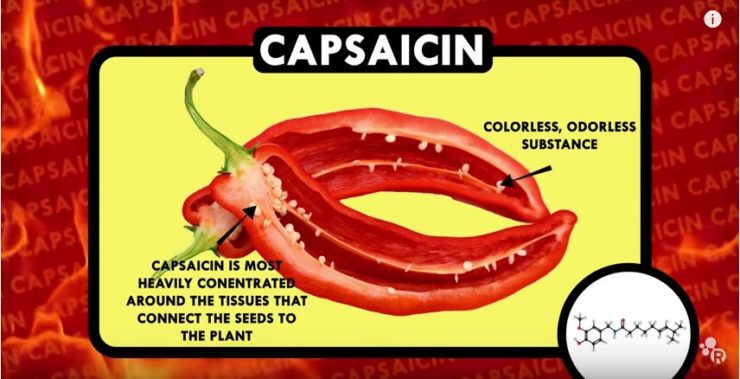
Capsaicin, on the other hand, is the compound responsible for the fiery heat found in various types of Capsicum peppers. It is a naturally occurring chemical compound found in the seeds, membranes, and placental tissue of these peppers.
In the medical field, the term "capsicum" is often associated with capsaicin, the substance derived from Capsicum chilli peppers. Capsaicin is used in various medical applications, primarily for its analgesic (pain-relieving) properties.
Medical uses of capsicum include:
1. Topical Analgesics: Capsaicin is used in the formulation of topical creams and patches for pain relief. These are often applied to the skin to alleviate conditions such as arthritis, neuropathic pain, and musculoskeletal pain.
2. Neuropathic Pain: Capsaicin can interfere with the transmission of pain signals by depleting or interfering with the function of substance P, a neurotransmitter involved in the perception of pain. This makes it useful in managing neuropathic pain.
3. Anti-inflammatory Properties: Capsaicin may have anti-inflammatory effects, which can be beneficial in certain conditions characterized by inflammation and pain.
4. Capsaicin Patch Therapy: Capsaicin patches are sometimes used for conditions like post-herpetic neuralgia, a persistent pain that can follow a shingles outbreak.
It's important to note that while capsicum-based treatments can be effective for some individuals, they may also cause a burning sensation, and not everyone tolerates them well. Consultation with a healthcare professional is essential before using capsicum-based products for medical purposes.
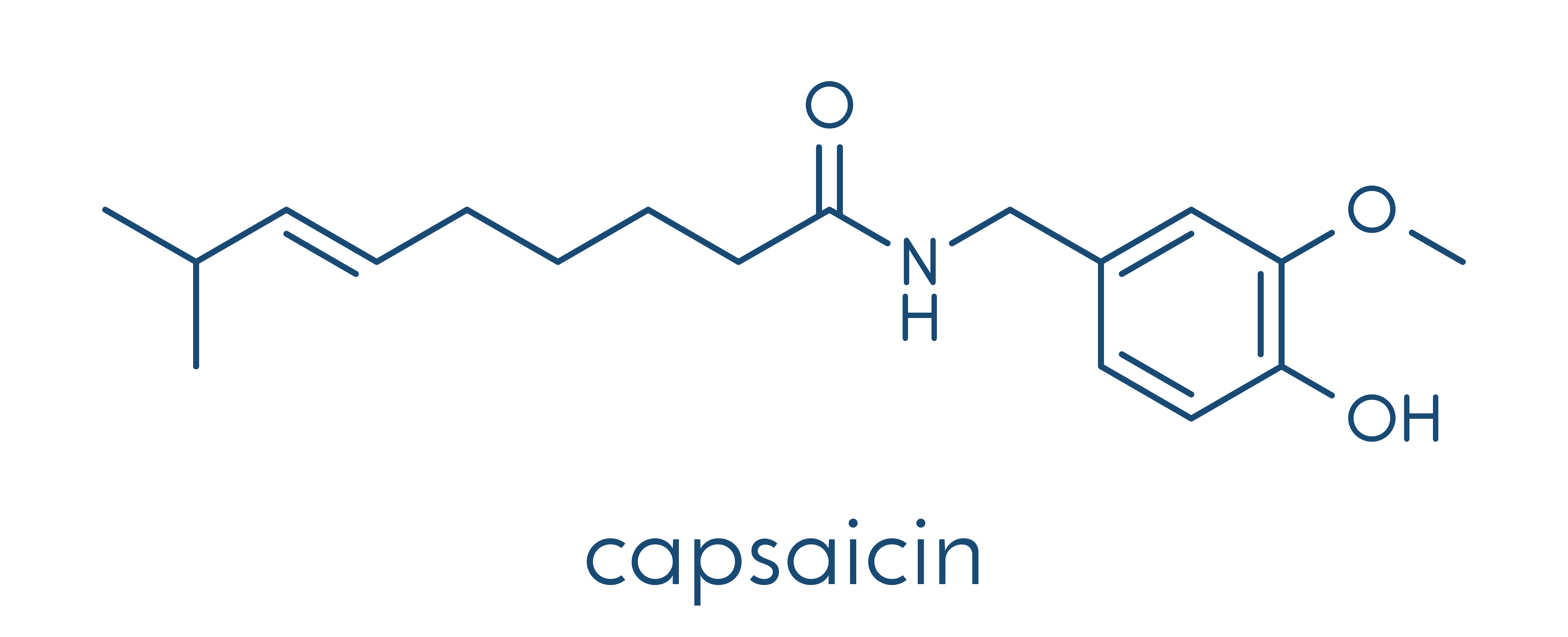
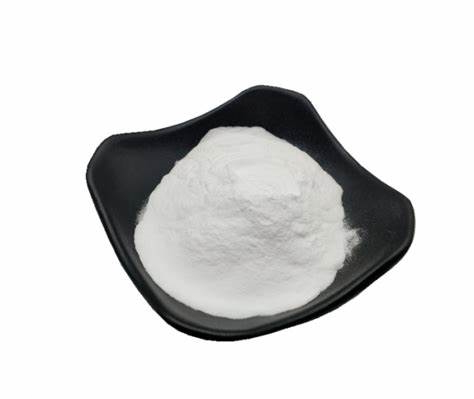
Pure capsaicin crystals... a wopping 16 million on the Scoville scale!!
How to Cool Your Mouth Down After Eating Spicy Food
So, you got a little overconfident and went with extra-hot buffalo sauce for your wings, added too many jalapenos to your nachos or were way too generous with the cayenne pepper while cooking dinner. Or maybe you just had no idea those peanuts were even going to be spicy. Whether on purpose or not, we've probably all bit off more than we could chew, at least a time or two, when it comes to spicy foods. So is there anything you can do to help cool down your mouth after eating spicy food? Or was your fate sealed with that first bite? As it turns out, soothing that fire in your mouth starts with understanding the science behind the burn — since it can help you understand what to reach for (and what to avoid) as soon as that burn hits.
What spicy food does to your body
You already know that when your mouth is on fire, it's not really on fire. It just feels like it is. But why? While the two may seem unrelated, the burning sensation you feel when eating something spicy is similar to the burning pain you experience when you accidentally touch a hot pan. In response to each, temperature-sensitive pain receptors are triggered — immediately screaming, "This is HOT!" to your brain. Sensing your skin or mouth is in danger, your brain sends back sensations of pain, hoping to encourage you to stop doing whatever it is you're doing. In the case of the hot pan, this pain serves an important purpose — it triggers an immediate reflex to remove your hand before it burns. In the case of a hot pepper that's not even actually hot, so to speak, the reason is less obvious. Hot peppers contain an alkaline, oil-based molecule called capsaicin, which sneakily triggers the temperature-sensitive pain receptors in your mouth even though the molecule itself doesn't produce heat or cause any real damage (unless you really overdo it). Once capsaicin triggers these pain receptors, your brain is tricked into thinking your mouth is in danger — cue the burning pain meant to encourage you to stop eating whatever spicy thing you're eating. These pain receptors in your mouth can adjust to the capsaicin's trickery, though. If you overstimulate these temperature-sensitive receptors by eating spicy food often enough, they're more likely to become desensitized to capsaicin. This is why people who eat spicy food frequently are able to handle it better than those who don't — the "burning pain" is dulled for them. For those who don't eat spicy food often, the burning sensation is either too much, and you stop eating it altogether, or you try to dull the burn by reaching for something you think might help cool your mouth down.
What helps cool your mouth from spicy food?

DO reach for some dairy. Many milk-based products contain a protein called casein, which can help break down those capsaicin tricksters. Think of casein as a detergent — attracting, surrounding and helping wash away the oil-based capsaicin molecules floating around your mouth, similar to how soap washes away grease. The catch here is that the dairy product you choose must contain casein to have any chance of cooling your mouth down. Good examples of milk products that contain casein include cow's milk (not almond, coconut or soy milk), yogurt, cottage cheese or sour cream.

DO drink something acidic. For those who need or want to avoid dairy, don't fret! You've got an option, too: acid. Remember how we said capsaicin is an alkaline molecule? Balancing it with an acid can help neutralize the molecule's activity. This means drinking or eating something acidic — such as lemonade, limeade, orange juice or a tomato-based food item or drink — may also help cool your mouth down. (Milk is also acidic, by the way.)

DO down some carbs. Starches are filling for a few reasons, one of which being that they typically come with a lot of physical volume. The volume that a starchy food brings can also be advantageous while eating spicy foods since it can help act as a physical barrier between capsaicin and your mouth. To put some starch between this sneaky molecule and your pain receptors, try eating a piece of bread, some rice or a tortilla.

DON'T assume a glass of water will be your salvation. If you take nothing else away, leave with this: Because capsaicin is oil-based, drinking water will basically just spread this molecule around your mouth — setting off even more of your pain receptors. Oops! To help cool your mouth down, skip the glass of water and try one of the options above instead.

DON'T expect alcohol to dull the pain. You've seen the old war movies. Before closing an open wound, one soldier pours alcohol on the wound to disinfect it. The wounded soldier then chugs what's left in the flask. People have been using alcohol to dull pain for a long time. But, just know that the amount of alcohol it takes to effectively reduce pain way exceeds the guidelines for moderate alcohol use. Plus, a lot of alcoholic beverages are really more water than they are alcohol, and, well...see above.